IPL is a powerful treatment for pigmentation, rosacea, and skin rejuvenation, as well as hair removal. Discover the truth about IPL at RR Skin, Body & Laser Clinic in Dartford, Kent, as we bust 5 common misconceptions. At RR Skin, Body & Laser Clinic in Dartford, Kent, we see many patients who are curious about IPL (Intense Pulsed Light) but aren’t quite sure what it actually does. Some assume it’s for hair removal, while others are unsure whether it’s safe for treating skin concerns like pigmentation or rosacea.
The truth is, IPL is a versatile, clinically proven technology that can target a wide range of cosmetic concerns. But with so much misinformation out there, it’s easy to see why some people are hesitant. In this blog, we’ll explain what IPL is used for, and then tackle five of the most common misconceptions surrounding this treatment.
What is IPL treatment and what can it actually treat?
IPL stands for Intense Pulsed Light, a non-invasive treatment that uses broad-spectrum light to target specific structures in the skin. Unlike traditional lasers, which use one wavelength of light, IPL uses multiple wavelengths, making it a versatile treatment.
At RR Skin, Body & Laser Clinic in Dartford, we use advanced IPL technology to treat a wide range of skin concerns, including:
- Rosacea & facial redness – IPL reduces redness and broken capillaries by targeting blood vessels beneath the skin.
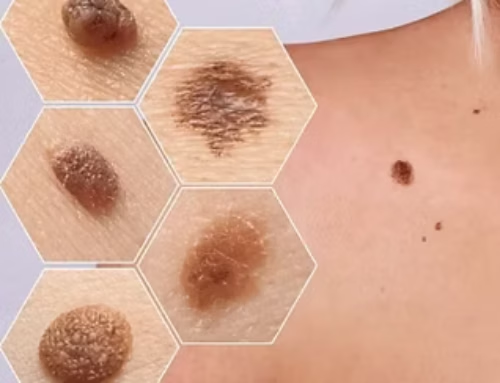
- Pigmentation & sun damage – It can lighten sun spots, freckles, and age-related pigmentation for a clearer complexion.
- Skin rejuvenation – By stimulating collagen, IPL can improve skin texture, tone, and radiance, giving you a fresher, more youthful look.
- Vascular lesions – Such as thread veins or spider veins.
- Acne – Most effective on inflammatory acne, IPL helps to reduce breakouts by reducing the blood supply to sebaceous glands, slowing down the production of sebum (oil).
With so many applications, it’s easy to see why common misconceptions arise.
1. Is IPL the same as laser treatment?
This is one of the most common misunderstandings. While both IPL and laser treatments use light energy, they are not the same.
- Laser treatments use a single, focused wavelength to target specific issues. For example, fractional lasers are often used for skin resurfacing, while vascular lasers are used for veins.
- IPL treatments use multiple wavelengths, making them versatile enough to treat pigmentation, redness, and overall skin quality.
At RR Skin, Body & Laser Clinic, we assess your skin and treatment goals to determine whether IPL – or another advanced aesthetic treatment – will give you the best results.
2. Is IPL treatment only used for cosmetic reasons?
A common misconception is that IPL is just a beauty treatment. In reality, IPL offers both cosmetic and therapeutic benefits.
While it does improve overall skin radiance, it’s also medically recognised for managing conditions such as:
- rosacea and persistent redness
- vascular lesions and broken capillaries
- sun-induced pigmentation
- Inflammatory acne
For many patients, IPL isn’t simply about appearance – it helps reduce discomfort, self-consciousness, and the emotional impact of visible skin concerns. At our Dartford clinic, we see first-hand how IPL can make a real difference to both skin health and confidence.
3. Is IPL too harsh for sensitive skin?
Quite the opposite – when performed by trained professionals, IPL can actually be an excellent option for those with skin conditions like rosacea or sun damage, which often cause sensitivity.
Modern IPL systems use carefully calibrated light settings tailored to your skin type and concern, so the treatment is both safe and effective. At RR Skin, Body & Laser Clinic, every treatment plan begins with a consultation and patch test to ensure your skin responds well.
4. Does IPL hurt?
Many patients considering IPL worry that it will be painful. In reality, the sensation is often compared to the snap of an elastic band followed by a warming feeling. Thanks to cooling technology, most patients find it very tolerable.
For skin rejuvenation, the treatment is generally gentler than people expect – far less invasive than resurfacing lasers or chemical peels, with little to no downtime.
5. Are IPL results permanent?
Another common misconception is that IPL provides a permanent fix after a single course of treatments. While the results can be long-lasting, they are not permanent.
- For rosacea and redness, IPL can dramatically reduce visible blood vessels and flushing, but triggers such as stress, alcohol, or sun exposure may cause redness to reappear over time.
- For pigmentation and sun damage, treated areas often look clearer and brighter, but new pigmentation can form with further UV exposure.
- For inflammatory acne, IPL can help reduce active breakouts and calm redness, but ongoing skin management and maintenance are usually necessary to sustain results.
- For skin rejuvenation, the boost in collagen improves tone and texture, but the natural ageing process means maintenance sessions are usually recommended.
Think of IPL as a treatment that delivers a powerful ‘reset’ for the skin. With the right aftercare and annual or biannual top-up treatments, patients can enjoy long-term improvements in clarity, smoothness, and overall skin health.
Final Thoughts
IPL (Intense Pulsed Light) is a highly effective, versatile, and safe treatment. From tackling rosacea and pigmentation to improving skin tone and texture, it offers real results with minimal downtime. At RR Skin, Body & Laser Clinic in Dartford, Kent, our experienced team will guide you through every step, ensuring your treatment is tailored to your skin type and concerns. If you’re ready to discover what IPL can do for your skin, book your consultation today – and let us help you achieve clearer, smoother, more radiant results.
CALL US ON +447511 506970